
If you’re a Nigerian student dreaming of studying at the University of California, Berkeley (often called UC Berkeley or simply Berkeley), one thing is probably on your mind:
“How will I pay for it?” That question is normal and very smart.
Berkeley is a world-class school, but studying in the U.S. can be expensive. The good news is that Berkeley has scholarship opportunities, and many students also combine Berkeley support with outside scholarships, departmental funding, and assistantships (especially for graduate students).
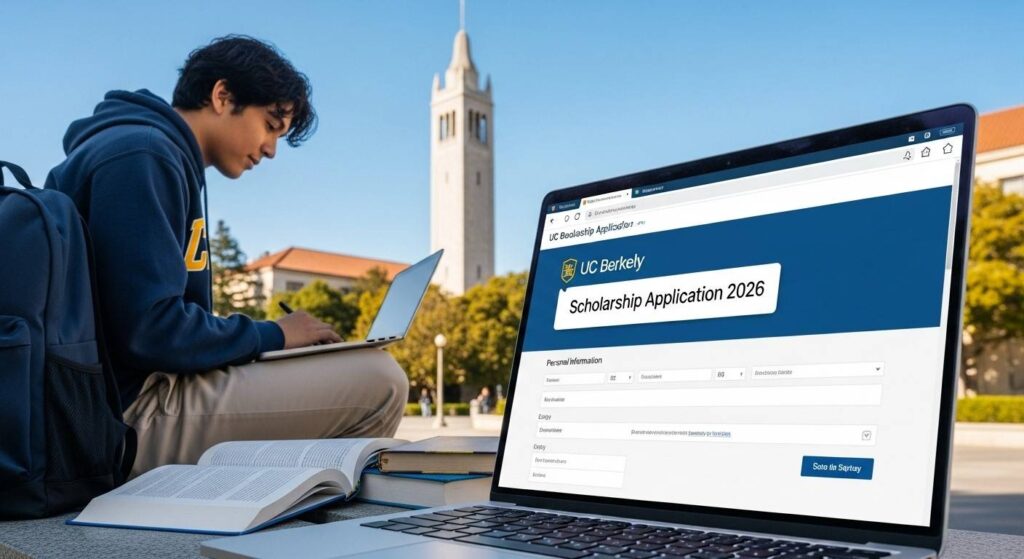
The challenge is this:
- Berkeley scholarships don’t always work like “one big form” you submit and get a full ride.
- Some scholarships are automatic consideration (you don’t apply separately).
- Some are need-based (and international students usually have limits here).
- Many of the biggest opportunities require you to be admitted first, then you continue the funding process.
This article will walk you through everything from scratch, like I’m explaining it to a younger brother or sister who has never applied to a U.S. school before.
By the end, you’ll know:
- What scholarships Berkeley offers
- What Nigerian (international) students should realistically expect
- The exact steps to follow for Fall 2026
- Common mistakes that ruin chances
- What to do after you apply
We’ll focus mostly on undergraduate scholarships (because most people mean that), but I’ll also include a strong section for Master’s/PhD funding, because graduate funding works differently and can be better.
Why This Method Works
This method works because it follows how Berkeley and the UC system actually make decisions:
1) UC Berkeley scholarships often start with the UC admission application
When you apply to Berkeley through the UC application, you get considered for certain opportunities based on what you wrote—especially in the activities/awards and scholarship-related sections. Berkeley’s own scholarship guidance emphasizes completing the UC application and using it properly.
2) Some scholarships are automatic consideration
For example, Berkeley’s page for international student scholarships states that international students are automatically considered for Regents’ and Chancellor’s Scholarship through holistic review from top applicants.
So if you try to “look for a separate scholarship form” and ignore the UC application quality, you may miss your strongest chance.
3) It uses a realistic funding strategy for Nigerian students
Many Nigerian students applying as international students discover a hard truth:
International students are generally ineligible for federal, state, and need-based university financial aid at Berkeley.
So this method doesn’t only rely on “Berkeley will fund everything.” Instead, it combines:
- Berkeley merit-based opportunities where possible
- Outside scholarships
- Department funding (especially for graduate programs)
- Proper budgeting and planning based on published costs
That combination is what actually works in real life.
Step-by-Step Process (For Fall 2026 Applicants)
Step 1: First, understand what kind of student you are (this decides your options)
Before you do anything, identify yourself correctly:
A) Undergraduate (Bachelor’s) applicant
You’re applying for first-year admission (from secondary school) or transfer (from another university).
B) Graduate applicant (Master’s/PhD)
You’re applying to a department/program (like Engineering, Public Policy, Data Science, etc.).
C) International vs eligible non-citizen vs U.S. citizen
Most Nigerian students are international students.
Berkeley states clearly that international students are generally ineligible for federal, state, and need-based university financial aid (those are typically for U.S. citizens, eligible non-citizens, and AB 540 eligible students).
This matters because it changes your scholarship strategy.
Step 2: Know the UC application timeline for Fall 2026
The UC system provides key dates for Fall 2026:
- UC application opens: August 1 (for Fall 2026 applicants)
- Filing period: October 1 – December 1 (Fall 2026 admission application filing period)
Real-life Nigerian example:
If you’re in SS3 in Nigeria and you finish WAEC around mid-year, you can still apply because UC applications open August 1 and you submit between October 1 and December 1. But you must prepare your documents early because international application planning takes time.
Step 3: Build a scholarship-ready profile BEFORE you even apply
This part is where many people fail.
Because some Berkeley scholarships are automatic consideration, your main “application” is your admission file.
Focus on:
1) Academic excellence (but not only grades)
Berkeley is competitive. Strong grades help, but they also look at rigor, consistency, and achievement.
2) Leadership and impact
Scholarships like Regents’ and Chancellor’s highlight qualities like creativity, leadership, and service.
That means your story matters: what did you do that impacted others?
3) Activities with proof
Don’t list activities like:
- “I like reading”
- “I like helping people”
Instead list:
- “Led a 12-week free math tutoring program for JSS students; improved pass rate from 43% to 71% (teacher records).”
- “Built a solar phone charging point project at school; served ~40 students weekly.”
4) Awards, competitions, and projects
If you have:
- STEM competitions
- Debate awards
- Olympiads
- Community recognition
Put them clearly.
Nigerian reality check:
Even if your school doesn’t have many clubs, you can still build a profile using:
- Volunteer teaching
- Small community projects
- Religious/community leadership
- Family responsibilities explained maturely (yes, it counts if presented well)
Step 4: Plan your budget using Berkeley’s published cost information (so you know your target)
Before you chase scholarships, know what you’re trying to cover.
Berkeley publishes undergraduate cost details, including tuition/fees and estimated totals depending on housing.
Why this matters:
If your total cost is high, and you only search for “$1,000 scholarships,” you’ll still struggle. You need a funding plan that matches reality.
Step 5: Apply to UC Berkeley the right way (this is where scholarship chances begin)
You apply to Berkeley using the UC application.
Here’s how to make your UC application scholarship-friendly:
1) Choose your campus and major carefully
Pick Berkeley and your intended major(s). Be honest and strategic.
2) Use the “Activities & Awards” section like a professional
- Use action verbs
- Show measurable impact
- Keep it truthful
3) Write strong Personal Insight Questions (PIQs)
UC uses PIQs. Your PIQs should show:
- resilience
- leadership
- curiosity
- responsibility
- growth
Real-life Nigerian scenario:
A student who had to combine school with helping in the family business can turn that into a powerful story about responsibility and time management; if written well.
4) Use the “Scholarships” section properly
Berkeley’s scholarship guidance indicates that some donor criteria are matched based on characteristics you list, and it specifically advises you to cite your characteristics in the UC application scholarship section.
So don’t leave that section empty or weak.
Step 6: Understand what Berkeley scholarships are realistic for Nigerian (international) undergrads
Let’s be plain.
Berkeley says international students are generally not eligible for federal, state, and need-based university financial aid.
So most Nigerian international undergrads should focus on:
A) Regents’ and Chancellor’s Scholarship (automatic consideration)
This is Berkeley’s most prestigious scholarship for entering undergraduates.
For international applicants, Berkeley notes:
- Candidates are selected from top applicants via holistic review
- All applicants, including international first-year and transfer students, are automatically considered
What this means for you:
You don’t submit a separate Regents application to be considered (based on that page). Your job is to submit the strongest UC application possible.
B) International student scholarships page (Berkeley Financial Aid)
Berkeley hosts a page specifically about scholarship opportunities for international students under Regents’ and Chancellor’s scholarship area.
Use that as your official starting point.
C) Outside scholarships
Berkeley encourages students to search and use outside scholarships.
This is huge for Nigerian students, because outside scholarships can sometimes cover major costs when institutional aid is limited.
Step 7: Build an “Outside Scholarship System” (this is where most Nigerians win)
Because institutional need-based aid is limited for most international students, outside scholarships are not optional; they’re your main weapon.
Berkeley itself highlights outside scholarships and notes students receive significant outside scholarship aid each year.
Your outside scholarship system should include:
1) A weekly scholarship schedule
Example:
- Monday: search new scholarships (1 hour)
- Tuesday: write/edit essays (1–2 hours)
- Wednesday: gather documents (30 minutes)
- Thursday: submit 1 application
- Friday: request references/follow-ups
2) Scholarship databases (start points)
Berkeley’s scholarship databases page lists places to search.
3) A “scholarship pack” of reusable materials
Have these ready:
- Master CV (1–2 pages)
- Personal statement (general)
- Leadership essay (general)
- Community impact essay (general)
- Academic goals essay (general)
Then you customize per scholarship.
4) A clean evidence file
Scan and store:
- WAEC/NECO results
- transcripts
- passport
- recommendation letters (if allowed)
- certificates
- project photos (if relevant)
Step 8: For graduate (Master’s/PhD) applicants; use the department funding route
Graduate funding can be very different (and sometimes better than undergrad).
Berkeley Graduate Division highlights multiple funding options and points students to fellowships and other support avenues.
Also, Berkeley notes that graduate students can seek support from departments (like Graduate Student Researcher and Graduate Student Instructor roles).
What Nigerians should do for graduate funding:
- Apply to programs that are funding-friendly (research-based, thesis options)
- Contact departments early about funding opportunities
- Build a strong research statement (for PhD especially)
- Ask about assistantships and fellowships
Requirements and Eligibility (What You’ll Typically Need)
1) UC Berkeley admission application (core requirement)
You can’t get Berkeley-specific scholarships if you don’t apply and get admitted.
2) Strong academics + holistic profile
For scholarships like Regents’ and Chancellor’s, Berkeley emphasizes selecting a cohort that stands out for leadership, service, convictions, etc.
3) Proof documents (common)
- Transcripts
- WAEC/NECO (or equivalent)
- Letters of recommendation (where required by outside scholarships)
- Essays/personal statements
- Passport
4) Financial aid eligibility rules (important for Nigerians)
International students generally can’t access Berkeley’s need-based aid the way U.S. citizens can.
So your eligibility will depend on the scholarship type:
- merit-based (possible)
- donor/department-based (possible)
- outside scholarships (possible)
- need-based institutional aid (usually limited for international)
Mistakes to Avoid (These Kill Chances Fast)
Mistake 1: Waiting until November to start everything
The UC application opens August 1 and the filing window starts October 1.
If you start late, your essays and scholarship strategy will be rushed.
Mistake 2: Treating scholarships like “luck”
Scholarships are a numbers game + quality game:
- Apply to many
- Customize smartly
- Keep improving
Mistake 3: Writing weak, generic essays
“Since I was young, I love education…” is not enough.
Use:
- specific stories
- measurable impact
- clear goals
Mistake 4: Not using the UC application scholarship-related sections properly
Berkeley explicitly points applicants to include relevant characteristics and interests in the UC application scholarship section because some scholarships match donor criteria.
Mistake 5: Ignoring outside scholarships
Berkeley encourages outside scholarships.
For Nigerian international students, this is often where your real funding comes from.
Mistake 6: Not checking official pages (falling for random blogs)
Always confirm key rules on official Berkeley and UC pages. Start from Berkeley Financial Aid & Scholarships.
How Long the Process Takes (Realistic Timeline)
Here’s a realistic timeline for a Fall 2026 Nigerian applicant:
January – June 2025
- Build profile (projects, leadership, awards)
- Start scholarship research list
July – August 2025
- UC application opens August 1
- Draft PIQs and activities list
September 2025
- Finalize UC application materials
- Prepare documents
October 1 – December 1, 2025
- Submit UC Berkeley application during filing period
- Continue outside scholarship submissions
Early 2026 (spring period)
- Admissions decisions and aid packaging typically happen around spring (timing varies by cycle)
- Keep applying to outside scholarships during this period
Summer 2026
- Visa planning, budgeting, and final funding decisions
- Prepare for arrival
What to Do After Applying
After submitting your UC application:
1) Keep applying for outside scholarships immediately
Don’t wait for Berkeley decisions to start searching.
2) Track everything in a simple spreadsheet
Columns:
- Scholarship name
- Deadline
- Link
- Requirements
- Essay topic
- Status (Not started / Draft / Submitted)
3) If admitted, follow Berkeley’s instructions closely
Berkeley Financial Aid & Scholarships is the official hub for aid guidance and next steps.
4) Be realistic about costs and plan backups
Use published costs to plan.
If funding is short:
- consider external sponsors
- consider cheaper housing options
- consider deferral only if allowed (and if it helps funding)
5) Graduate students: talk to your department
Graduate funding is often department-controlled, and assistantships can be key.
FAQs (Frequently Asked Questions)
1) Do I need a separate scholarship application for UC Berkeley?
Some scholarships are automatic consideration (like Regents’ and Chancellor’s for applicants, including international applicants).
Others (especially outside scholarships) require separate applications.
2) Can a Nigerian international student get financial aid from UC Berkeley?
Berkeley states international students are generally ineligible for federal, state, and need-based university financial aid.
So you should focus on merit opportunities + outside scholarships + (for graduate) department funding.
3) What is the best Berkeley scholarship for international undergraduates?
Regents’ and Chancellor’s is Berkeley’s most prestigious scholarship for entering undergraduates.
4) When does the UC application open for Fall 2026?
August 1.
5) What is the UC application submission window for Fall 2026?
October 1 to December 1.
6) If I’m not rich, should I even apply as an international student?
Yes, but apply with a funding strategy:
- aim for top merit consideration
- apply widely to outside scholarships
- consider graduate pathways where funding can be stronger
7) What if I can’t find enough scholarships to cover full costs?
Then you combine:
- partial scholarships
- family support (if possible)
- external sponsors
- and realistic budgeting based on cost of attendance
8) Are outside scholarships worth it?
Yes. Berkeley actively encourages outside scholarships.
9) For graduate school, is “scholarship” the main funding route?
Often, graduate funding comes through fellowships, grants, and department roles/assistantships.
10) How do I avoid scholarship scams?
Use official university resources and reputable databases, never pay “processing fees” for a scholarship, and confirm everything on official pages first. Berkeley provides official guidance and scholarship resources through its Financial Aid & Scholarships site.
11) What’s one thing that improves my chances the most?
A strong UC application with real impact + consistent outside scholarship applications. Also, don’t leave scholarship-related sections weak.
Conclusion
Applying for UC Berkeley scholarships in 2026 is not about “finding one magic form.”
It’s about doing the process the right way:
- Understand your category (international vs eligible aid recipient)
- Apply early using the correct UC timeline
- Make your UC application scholarship-ready (activities, PIQs, scholarship section)
- Target realistic Berkeley opportunities like Regents’ and Chancellor’s (automatic consideration, including international applicants)
- Build a serious outside scholarship system
- For graduate school, focus heavily on department funding and fellowships
If you follow this step-by-step and stay consistent, you’ll put yourself in the best possible position, not just to get admitted, but to actually afford the journey.